

Here is the line we repeat more than any other in the chair: healthy gums do not bleed.
Somewhere along the way, a lot of people decided a little blood in the sink is normal — the price of brushing hard, or flossing after skipping it for a week. It is not normal. Bleeding is inflammation, and inflammation is the very first stage of gum disease. The good news is that this early stage is almost completely reversible, and you have more control over it than you think.
So let me walk through what your gums are actually telling you, why it happens, and what genuinely protects them.
The signs, from earliest to most serious
Gum disease is sneaky because it rarely hurts until it is advanced. Pain shows up late. The warning signs show up early — if you know what to watch for.
- Bleeding when you brush or floss. The first and most common signal. One spot that bleeds every time is your gums waving a small flag.
- Redness or puffiness. Healthy gums are firm and pale pink. Gums that look red, shiny, or swollen are irritated.
- Tenderness. Gums that feel sore or sensitive near the gumline, especially in one area.
- Persistent bad breath. The bacteria that inflame gums also produce a smell that brushing does not fix for long.
- Receding gums. Teeth that look “longer” than they used to, or a notch you can feel where the gum has pulled back.
- Looseness or shifting. This is the late sign. By the time teeth feel loose, the disease has reached the bone that holds them.
The first three are gingivitis — reversible. The last two mean it has progressed toward periodontitis, where the damage to bone and ligament does not fully grow back. The whole point of catching it early is to never let it cross that line.
What actually causes it
Almost all gum disease starts with one thing: biofilm, the soft, sticky bacterial film that forms on your teeth every single day. Leave it along the gumline and it irritates the gum, which inflames, which bleeds. Let it sit longer and it hardens into tartar, which you cannot brush off — and tartar holds even more bacteria against the gum. The cycle feeds itself.
But biofilm is only the trigger. How strongly your gums react depends on factors that are very much you:
- Smoking and vaping are the biggest avoidable risk. They starve the gums of blood flow, which — strangely — can hide the bleeding while the disease gets worse underneath.
- Diabetes and gum disease run in both directions. High blood sugar inflames gums, and inflamed gums make blood sugar harder to control.
- Hormonal shifts — pregnancy, menstruation, menopause — can make gums far more reactive to the same amount of biofilm.
- Stress raises inflammation body-wide, gums included.
- Genetics. Some people are simply more prone, no matter how well they brush. That is not a reason to give up — it is a reason to be more consistent and see your hygienist more often.
This is why two people with the same habits can have very different gums. The biofilm is the spark; your body decides the size of the fire.
How to actually protect your gums
The basics are unglamorous and they work. There is no supplement, rinse, or gadget that replaces them.
Clean the gumline, not just the teeth. Most people brush the broad flat surfaces and miss the exact spot that matters: where tooth meets gum. Angle a soft brush at 45 degrees toward the gumline, gentle pressure, twice a day. Hard scrubbing damages gums rather than protecting them.
Clean between your teeth, daily. A brush physically cannot reach the surfaces where two teeth touch — and that is where gum disease loves to start. Floss, interdental brushes, or a water flosser all work; the Cochrane review on interdental cleaning found that cleaning between your teeth plus brushing reduces gingivitis more than brushing alone. The tool matters less than doing it every day.
Do not skip your cleanings. Once biofilm hardens into tartar, home care cannot remove it. A professional cleaning resets the surface so your daily routine can keep up. For healthy gums that usually means every six months; for gums already inflamed, more often.
If you smoke, this is the lever. Quitting does more for your gums than any product on the shelf.

Why we clean gums the way we do
Traditional cleanings scrape tartar off with metal instruments. It works, but it can irritate already-inflamed gums and miss the soft biofilm where the trouble actually begins.
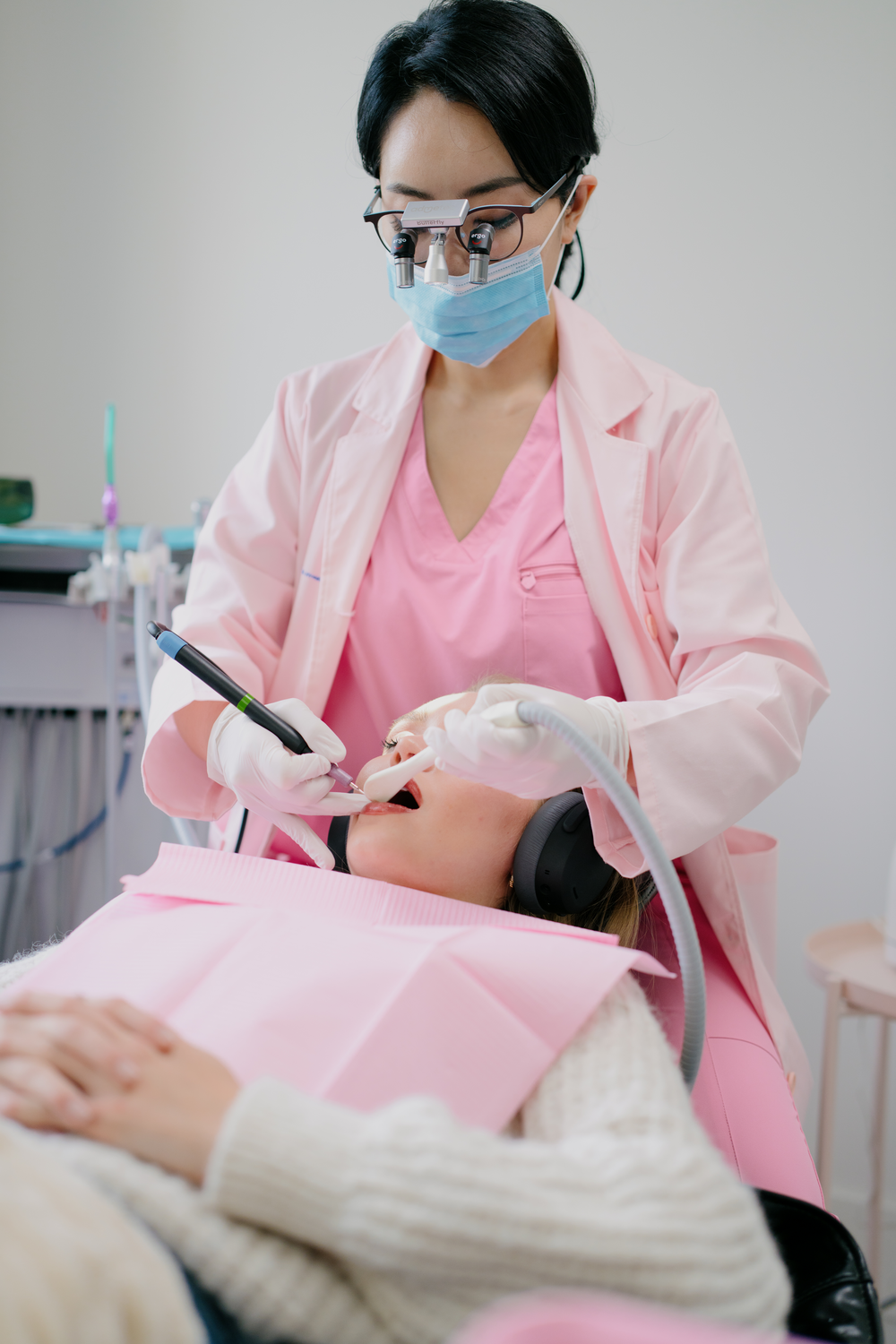
At Aviator we use Guided Biofilm Therapy. First we stain the biofilm so you can see exactly where it is collecting along your gumline — usually the spots you are missing at home. Then a warm jet of water and fine erythritol powder clears it without scraping, and for deeper gum pockets a gentle sub-gingival version reaches under the gumline where bacteria hide. For inflamed gums, the difference in comfort is real, and comfortable cleanings are the ones people keep coming back for.
When to come in
Do not wait for pain — by then the early, reversible window may have closed. If your gums bleed regularly, look red or puffy, or you cannot remember your last cleaning, that is the signal.
If you are in Burnaby, Langley, or Vancouver, come in and we will show you exactly where your gums need attention and build a routine around your actual mouth.
Hwanhee Kim, RDH, is the founder of Aviator Dental Hygiene. The Aviator Dental Hygiene team provides care across three independent dental hygiene clinics in Burnaby, Langley, and Vancouver, where Guided Biofilm Therapy (GBT) is integrated as the standard protocol for every appointment.
