

Every hygienist has had this conversation. You are in the chair, we mention the spots between your teeth that are not getting cleaned, and you ask: “So should I just get a water flosser?”
It is a fair question. The marketing is everywhere, the gadgets look impressive, and string floss is nobody’s favourite part of the day. So here is the honest version — the one we give patients at Aviator — instead of the one that sells the most flossers.
Neither tool is “better.” The best one is the one you will actually use, every day, on the spots that need it. That sounds like a dodge. It is not. It is the single biggest predictor of whether your gums stay healthy, and it is backed by more evidence than any head-to-head product comparison.
Let me explain what each one is genuinely good at, and how we decide which to recommend.
What the research actually says
This is where it gets interesting, because the studies are messier than either side admits.
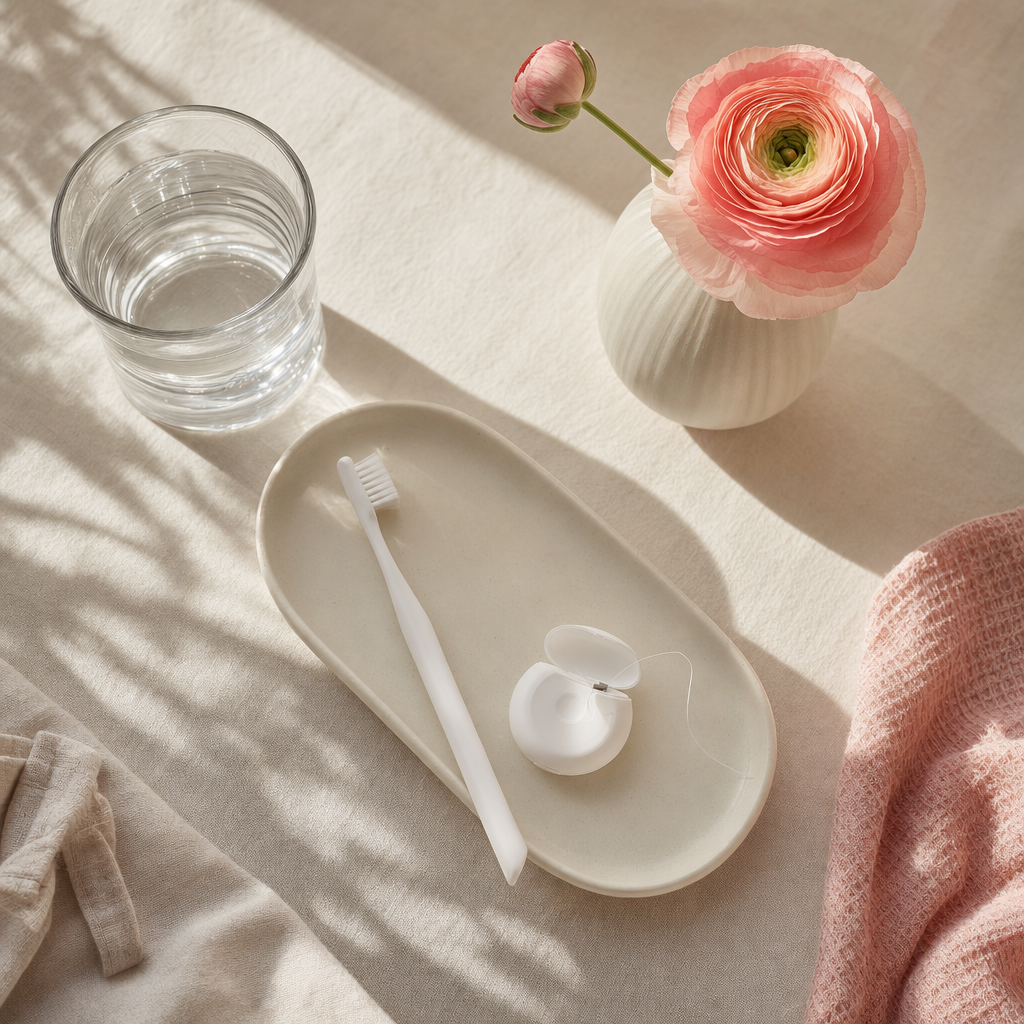
String floss has the longer track record. It physically scrapes the soft bacterial film — biofilm — off the sides of two teeth where they touch, the one place a brush cannot reach. That mechanical contact is the point. The catch: the evidence that flossing reduces gum disease is real but modest, mostly because most people do it badly, rarely, or not at all. A tool only works when it is used.
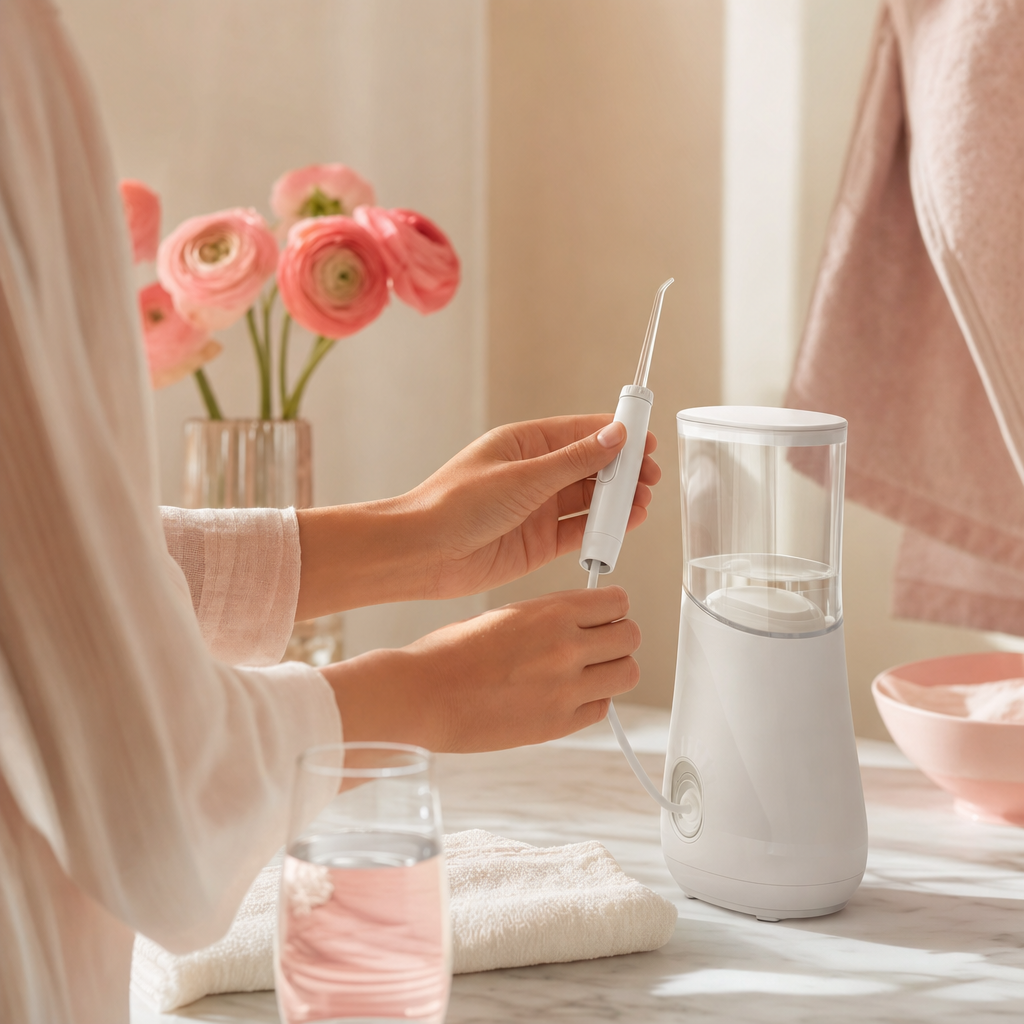
Water flossers — the pulsing-jet kind — have strong, consistent evidence for one thing in particular: reducing gum bleeding and inflammation. Several clinical trials have found them as effective as, and in some cases better than, string floss at calming inflamed gums. Where the evidence is weaker is plaque removal between very tight teeth, where a jet of water can skim past the contact point that string floss grabs directly.
If you want the careful summary: the Cochrane review on home interdental cleaning found that cleaning between your teeth — by any method — plus brushing reduces gingivitis more than brushing alone, but the certainty of the evidence is low and no single tool runs away with it.
Translation: the act matters more than the instrument.
When we recommend string floss
String floss is still our default for most healthy mouths, and it wins clearly in a few situations:
- Tight contacts. If your teeth sit close together, floss reaches the contact point and wraps the curve of each tooth. A water jet tends to glance off.
- You want the cheapest effective option. A year of floss costs a few dollars. It travels anywhere and needs no charging.
- Targeted cleaning. When we have shown you one or two specific trouble spots, floss lets you hit exactly those, with control a jet does not give you.
The technique is what makes it work: hug the side of the tooth in a C-shape and slide gently below the gumline, rather than snapping straight down. Two minutes, once a day. Timing does not matter — morning or night, before or after brushing. Consistency does.
When we recommend a water flosser
For a lot of patients, the water flosser is not the lazy option — it is the correct option. We actively recommend it when someone has:
- Braces, retainers, or other orthodontic hardware. Threading floss under wires is miserable enough that most people quit. A water flosser cleans around brackets in seconds.
- Implants, bridges, or crowns. These need cleaning around and under, where a jet reaches and string struggles.
- Gum pockets or a history of gum disease. The pulsing water flushes below the gumline where biofilm hides — the same logic behind the Guided Biofilm Therapy protocol we use in the clinic.
- Arthritis, limited dexterity, or trouble with their hands. If wrapping floss around two fingers is painful or fiddly, a water flosser removes the obstacle entirely.
- A genuine, honest aversion to string floss. If you will never floss but you will happily use a water flosser for 60 seconds, the water flosser wins by default. The best tool is the one you do not skip.
The answer most people don’t want to hear
The strongest oral-care routine uses both, and they are not really competitors — they do different jobs. String floss breaks the contact between tight teeth. A water flosser flushes the gumline and the hard-to-reach hardware. Brush, then floss the tight spots, then run the water flosser along the gums.
But “do both, perfectly, forever” is advice that mostly produces guilt. So here is the realistic version we actually give people:
Pick the one you will do every single day, and do that one well. A water flosser used nightly beats string floss you bought with good intentions and used twice. String floss used faithfully beats a water flosser still in its box. Daily-and-imperfect crushes occasional-and-textbook every time.
How to tell what your mouth needs
You do not have to guess. At a cleaning, we can see exactly where biofilm is collecting — we even stain it so it is visible — and tell you whether your gaps, gum pockets, or hardware point toward floss, a water flosser, or both. The disclosing step in a GBT cleaning makes those spots impossible to miss, which is the whole point.
If you are in Burnaby, Langley, or Vancouver, come in and we will build a between-the-teeth routine around your actual mouth — not a product ad.
Hwanhee Kim, RDH, is the founder of Aviator Dental Hygiene. The Aviator Dental Hygiene team provides care across three independent dental hygiene clinics in Burnaby, Langley, and Vancouver, where Guided Biofilm Therapy (GBT) is integrated as the standard protocol for every appointment.
